31 July 2026

Mercedes-Benz Cars Global Deliveries : 2025-2026 (H1)


After a 9% fall in 2025, 2026 is currently down 7%. Not unexpected as it seems to be the norm for the industry, even at the premium end. 

Mercedes-Benz divides it's sales into three categories, Core, Entry and Top End, all of which lost ground fairly evenly.

Data & photo source: Mercedes-Benz.

Regions:
Traditionally strong regions of Europe and North Amercia are doing well. The fly in the ointment is Asia. China is still an important market, but is less so with each passing year. The Rest was also down (11%) but accounts for just 5% of global deliveries.


Electric:
Counting full electric and hybrid cars, 168,812 deliveries were made in H1. EVs are up 28% and PHEVs (hybrids) down 32%. Combined, that's a 7% fall in volume. In 2025 deliveries remained the same as the year before.

I'm surprised with PHEV deliveries dropping so much. They are now neck and neck with EVs.

Mercedes-Benz Vans Global Deliveries : 2025-2026 (H1)


Mercedes-Benz Vans is a very important part of the company. It's unusual for a premium marque to also have a commercial vehicle (CV) wing, but it works.

Commercial vans were up 3% in H1, passenger vans down 19%. Combined, vans were down 1%.
Europe (including Germany) has 72% of total sales and is up 6%. North America is also up 6% YTD. Asia have fallen quite dramatically, especially China. 

Electric van deliveries came to 16,194, up 39%. This is an area M-B is and will prioritise. 


Data & photos source: Mercedes-Benz (Sprinter & Vito).

Honda Global Production : 2025-26 (H1)


Production numbers being down just 3% and 4% for the first two quarters is a win, all things considered. 

China has been a thorn in the side for the company in recent years and the rest of Asia (excluding Japan) is starting to follow suit. 

With overall production currently about half (49%) of a complete 2025, the rest of Asia figure is 44% and China just 29%. All other regions are over the 50% mark.

Honda isn't a company that discounts to support sales figures and in as cutthroat Chinese market, that policy is going to cause sales to plunge.  

Data & photo source: Honda. 

Mazda Global Deliveries : 2025-26 (H1)


Deliveries were down 10% for the first quarter, the fourth consecutive quarter of decrease. However, Q2 was up 1%, bringing the YTD figure back to -5%. With the proliferation of Chinese brands aggressively seeking customers, it's hardly surprising. I my Q1 report, I made an error in the 'Other' total. It's been corrected here. 

Data & photo source: Mazda.

As for regions, all bar Europe were down. China is now barely of any relevance, such has been the decline there. With 'Others' now making up a third of the volume, adding some more regional breakdowns would be helpful. 

23 July 2026

Slovakia Passenger Car Sales : 2026 (Jan-Jun)


June registrations were up 6% in June but down 4% YTD. Škoda sells one in five cars here, twice as good as Volkswagen's one in ten. Between them one in three and they both improved market share, albeit slightly. 

Hyundai and Kia have 15% of the market between them but that is down a sizable two percentage points on 2025. Suzuki had a 37% jump in its share but Mercedes-Benz and BMW are having a subdued YTD. I'm surprised Tesla has only just arrived. 

Four Škoda models sell in strong numbers. The Octavia (1,949), Fabia (1,294), Kamiq (1,207) and Karoq (1,201). The Totota Corolla (1,205) also sells well. 

Data source: ZAP. Photos: Suzuki Swift & Tesla Model Y. 


22 July 2026

Kia Deliveries : 2022-26 (H1)


Kia is the smaller volume brand compared to Hyundai but it still sells in large numbers. An excessively protected home market helps. So how have recent years gone, when broken into quarters?

2022: It was up 5% to 2.9 million. The EV6 crossover arrived, the fifth generation Sportage SUV and Niro small SUV.  Plenty of activity there. 

2023: Volume was up 6% to nearly 3.1 million units. 
The EV9 debuted as an electric seven seat SUV. 

2024: Global sales were the same as last year. The EV5 electric medium sized SUV was introduced. The Seltos comapct SUV had a major mid life update.

2025: A modest 2% increase to 3.135 million deliveries. The new K4 passenger car arrived, the Tasman pick up truck and EV3 compact crossover likewise. 

2026: The PV5 passenger and commercial van was introduced. Sales so far are up 3% YOY. 

Summary: Kia is a very consistent performer. It seems to be riding the increased competition well. The question is can it continue to do so? 

Data source: Kia. Photos: Sportage & K4.

Australia China PC/LCV Brands: 2025-26 (H1)


In 2026, Chinese brand penetration was 20.4% and for H1 2026 27.3%. The majority of cars arriving in Australia are manufactured in China, some for legacy brands. 

The big brand in Australia is Toyota and has been number one for 23 consecutive years, since 2003.  It has had supply issues but extra shipments are being arranged to minimize wait times. This has allowed rival brands like BYD to gain significant gains in the meantime. 

BYD is making sure supply isn't an issue for them and is closing in on a brand that looked to have a permanent seat at the top of the charts. It's currently in second place. GWM (Haval, Tank, Ora & GWM Ute), Chery and MG are all strong brands here with others ready to join them. 

Data source: FCAI, Car Expert.
Photo sources: Zeekr Australia (X) & BYD Australia (Denza B8).

21 July 2026

Maserati Global Sales: 2023-26 (H1)


With the marque going up market, it was inevitable that deliveries would fall in the transition period. As we see from 2023 to the halfway point of 2026, volume has been falling dramatically. The 2026 37% drop is a YOY comparison. 

For the 2012-25 article, simply click here

Israel China PC Brands: 2025-26 (H1)


When it comes to cars, Israel looks to Asia. It was Japan and Korea but now there is also China. Cars with some sort of electric propulsion are also popular and that suits Chinese car makers. 

In 2026, the total for Chinese brands was 29.7% and for H1 2026 43.9%. The top two places are currently held by Jaecco/Omoda brands combined and Chery. They also have six of the top ten places. As Israel intends to ban the sale of new petrol and diesel cars by 2030, surely the swing to Chinese brands will continue. 

Data source: Israel Vehicle Importers Association.
Photos: Changan (Deepal SO7) & GAC (Aion V).


19 July 2026

USA Light Vehicle Sales: 2025-26 (Jan-Jun)


US light vehicle sales are down around or slightly above the 3% mark. If the figures below are rounded, then they are educated estimates or the way they are released by the car company. Otherwise they are exact numbers per the car company. 

Toyota is gradually pulling away at the top from Ford and Chevrolet. The next four Asian brands have all increased their share. 

There are small brands like Morgan that don't report sales, although Morgan for example could be about 150 sales in H1 2026.

If you are wondering why the usual influx of new Chinese brands aren't listed, it's because they haven't arrived. As this list is compiled from each car brand's press releases, I'm glad they haven't arrived. It's a big enough job as it is without more brands.  

Data source: Car companies. 
Photos: Ford Maverick, Nissan Sentra & Tesla Y.

18 July 2026

UK China PC Brands: 2025-26 (H1)

Registrations of Chinese brands in the UK was 9.8% in 2025 and are currently at 15.3%. That's steady progress and will only become more so. 

European brands that have dominated the market will be watching with intense interest as the UK hasn't been resisting this influx like the EU has been.

The data below has been extracted from the complete list of brands. MG got in early in the UK and benefits from that, but they seem to be hitting a ceiling. Newer entrants are making large gains. Smart is a Chinese joint venture brand, so I view it as suitable for inclusion.

UK Passenger Car Sales : 2026 (Jan-Jun)


Registrations were up 11% in June and 9% YTD. The current top six all lost market share on 2025. Mercedes managed to climb three places despite a 1% fall due to Toyota, Nissan and Hyundai all dropping more. This Nissan's lowest ranking since 1971 when they were named Datsun. Hopefully, the second half of the year will be more successful.   

Chinese brands are making their presence felt but for now only MG has managed to enter the top ten. How far they will go is a moot point. With EVs taking 30% of registrations in June and 25% YTD, one would think Chinese brands will relish the opportunity to capitalise on that. 

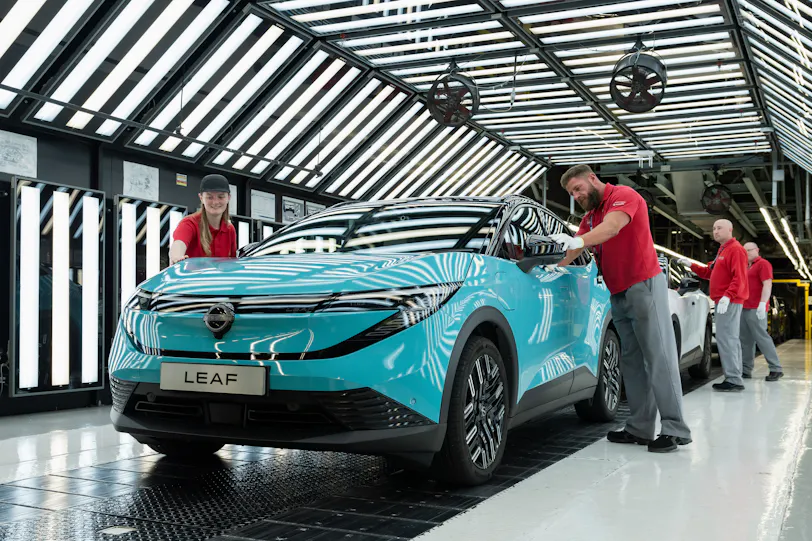
Data source: SMMT. Photos: Nissan Sunderland & Omoda. 

17 July 2026

VW Group Car/LCV/CV Deliveries: 2025-26 (H1)


The VW Group's H1 is broken down into four parts. The first covers passenger car and light commercial deliveries by brand. 

Deliveries are down 7% YTD (Q1 was -4%). Just over half (52%) are for VW PC, which is down 11%. Audi is down 7% and Porsche -15%. Škoda is up 9% and VW light commercial division +7%.


The truck division is known as Traton. Man is up 8% (Q1 up15%), Scania +1% (Q1 -6%) but the rest are down. That puts the division 1% lower than 2025 (Q1 -6%). When added to the above, it brings VW Group to 4,125,700 units. 


The regions involve adding the two above for a complete VW Group. Western Europe leads the way with 42% of the total and a 3% increase. China continues its trajectory down, now just under a quarter of the total and -26% (Q1 -15%). Take China out of the equation and the result is quite good. 


Finally, we look at how electric vehicles are faring. Virtually all of them are sold in Europe (86%) and it was the only region that increased. Frankly, everywhere else is very poor. The USA and China experienced a collapse in volume but as the numbers involved aren't large, it mitigated the impact to just -6% collectively (Q1 -8%).

Volvo / Polestar Deliveries : 2025-26 (H1)


Volvo had a disappointing 2025 after several years of solid increases. In trying times, 2026 is down 8%, -11% in Q1 and  -6% in Q2. At the half way point, deliveries are -54% of the total 2025. 

Most models are feeling the pinch with new models (XC70 and ES90) not of sufficiently large in volume to make up the shortfall. 

Data source: Volvo (ES90) & Polestar (2).

The Rest about the same as 2025. The pain is coming from the Americas (-12%) and China (-27%). Volvo is seemingly not chasing volume but realigning its sales.

I'd love to know the logic behind reducing the breakdown of regional deliveries to just two regions and everything else lumped into a nebulous 'Rest' category. Over 60% of the total is therefore unspecified. Duh!

As for Polestar, after a poor 2024, 2025 was up 34%. Now in 2026, up to H1, it is at break even point with last year. This is due to a drop in Q2 of 4%, offsettling the Q1 increase of 7%. More detail isn't available from Polestar. 

The current model range of the Polestar 2 (saloon car), Polestar 3 (SUV), and Polestar 4 (SUV coupe). The Polestar 5 GT is the next cab off the rank, due about now (mid 2026).