Showing posts with label Region Europe. Show all posts

07 February 2026

Toyota Model Europe Region Sales : 2024-25


Toyota brand deliveries were up 1.3% in 2025. In many of the smaller markets they are the top selling brand. Reliability, resale value and leading hybrid technology all count in Toyota's favour. 

They also want to promote a sporty image and the arrival of the GR Corolla in Europe for 2026 should help that cause. They already have a strong rally racing reputation.


Toyota included both passenger cars and light commercial vehicles in their data. 

The ProAce name denotes vans from Stellantis. Some have seats and are classified as passenger vehicles. 

The small Yaris and Yaris Cross are very popular in Europe. Add the city Aygo crossover and small is big for the brand in this region. 

The Corolla Hatch and Tourer (wagon) are not combined with the sedan. The former is designed to be sporty while the latter is more conservative. 


Data source: Toyota Europe.
Photos: Corolla GR (above) & Aygo (below).

Lexus Model Euro Sales : 2024-25


The marque is synonymous with outstanding reliability and durability, leading to sound resale value. Is that enough to win over the European premium car buyer?


Of the 882,231 global sales Lexus made in 2025, Europe comprised 85,075 of them.Put another way, just under 10%. 

With Europe accounting for something like 15% of world passenger car sales, Lexus could do better in the region.

The X in the model name represents crossover or SUV and they dominate sales figures (plus the RZ SUV for zero emission). 

The LBX and the NX are the main models, taking 62% of the sales for the marque between them. 

Globally, Lexus sales were up about 3.5% but in Europe down by the same amount. Germany has much to do with that, being the largest market and not one lexus does at all well in.

Established loyalty to European premium marques works against Lexus, lesser brand recogition and not always meeting the needs of the Euro premium buyer.

Lexus ticks many boxes for me. The problem I have is that I have never driven one or even sat in one. Maybe many premium buyers in the region are like me in that regard.

Data source: Toyota. Photo source: Lexus (RZ top & LX below). 

16 December 2025

EU to Backtrack on China Sourced EVs?


Since November 2024, the EU imposed tariffs on Chinese sourced electric cars (BEV) due to unfair advantage through state subsidies. Now pressure is being applied by a European car maker who manufacture a BEV in China to make an exception for them. What is the reasoning?

According to VW's SEAT/Cupra, they say it is "an unfair tariff that penalises strategic investments." So making cars in China rather than Europe is 'strategic' or the definition of the word 'helping achieve a plan'. Protecting European jobs isn't the plan nor punishing perceived infair subsidies, so I guess increased profit is the strategic plan.  

After deciding to build a car somewhere and then legislation is introduced that affects that decision adversely is a bitter pill to swallow. Getting an exemption would seem an ideal solution. The downside is opening the door to many others doing the same and that works against the initial tariff's aim. 

Other brands make electric cars in China. BMW decided to make the MINI Aceman in China rather than the UK but would retaining tariffs lead BMW to start making them in the UK? Volvo produces the EX30 in Belgium and that circumvents tariffs. It seems Dacia will bring the Spring model production back to Europe in 2026. I wonder how the manufacturers that accepted BEV tariffs and are moving production back to Europe are now feeling?

 As to whether tariffs are a good idea or not in this situation is not an argument I want to join. As a general observation though, SEAT/Cupra is looking at their personal situation and they want an exception for their benefit. Considering the effect on others and the impact on the overall objective becomes secondary. 

BEV sales in Europe aren't going that well anyway and plans to impose a ban on selling new cars with internal combustion engines in the EU from 2035 have been abandoned. I wonder if trying to beat the tariff will reap that much anyway.

05 February 2025

European Nation Electric Car Sales : 2024

ACEA put out data on how electric car (BEV) sales are progressing in European countries. The continent wants to end fossil fuel sales by 2035. We have entered 2025 so that isn't that far away. How are member nations doing in this regard?

The size of the market has to be factored in when looking at the list below. Germany has been the leader numerically as it is the largest car market. It took over from Norway in 2019 but has now been passed by the UK in 2024, albeit by a tiny margin. 

Government subsidies ended in Germany in 2023 and that is the reason for the 27% drop which goes to show that BEVs aren't that popular when they have to meet the market without government sweeteners.

The UK has become the leading BEV market in 2024, reaching just under 20% of total sales. In Germany it was just 13.5% and Italy 5.5%. In contrast, for Norway it was 89%, Denmark reached 51.5% and the Netherlands 35%.

All this data excluded hybrid cars. As far as I know, the EU hasn't set a date to end their sale although the UK has 2035 as a target date. Of course, dates and targets are flexible.

Data ACEA. Picture VW.

03 February 2025

Europe Top 10 Models : 2024


The Top 10 model list had two changes from 2023. Out went the Opel / Vauxhall Corsa and Fiat 500. In came the Škoda Octavia amd Dacia Duster.

VW had three models and Dacia two on the list. It's good to see a budget brand doing well as they offer value for money and good quality. 

The 268,000 for first place sales was the highest since 2020. The tenth place was the best for that position since 2020. 

For the 29 years I've been tracing the Top 10 in Europe, the only ever present model has been the VW Golf and it has not finished below seventh. The Renault Clio and Opel / Vauxhall Corsa have made the list for 27 years each but the latter missed out in '24. 

VW has had the most models with 68, Opel /Vauxhall 49, Renault 44 and Ford 41. I doubt Ford will make the list again as it was last on it in 2020 and its focus (no pun intended) is more on light commercials. 

31 January 2025

Nissan / Infiniti Sales Europe : 2023/24

Nissan has recently made this data available so in a world where many manufacturers are too sensitive to offer information of this sort, well done Nissan. They join Toyota in this (click here to view it).

Nissan: Registrations have grown 24% over the past two years and that has been achieved with a pruned down range. The Qashqai and Juke are the two main models with the X-Trail not too fat behind. The Ariya EV (right) has effectively replaced the Leaf which has been discontinued in Europe.

Nissan has got into a range of vans sourced from Renault. It ended production of its own light commercials in Europe and the switch seems to have been successful. The Townstar is pictured below. The latest names for the vans are used in the list. 

Infiniti: There were high hopes for the marque in Europe with a push around 2016 and 2017, spearheaded by the QX / QX30. Then an about turn of giving up on that almost as quickly as it was started. 2023 was a low point for sales but in 2024 a slight upturn. The QX80 (below) is the leading model.

I assume it was soon realised that winning over European buyers of premium cars is a long haul project that was underestimated. The right decision was made as it was too ambitious. With a more measured approach and more realistic goals, the marque still has a place in Europe if Nissan want that. 

Data source: Nissan Group.

24 January 2025

Toyota / Lexus Sales Europe : 2023/24

How many car companies publish data like this for Europe? I can't think of any other. Nissan does the same now (click here to view). Toyota does so here it is. 

Data source: Toyota Europe. Pictures Toyota & Lexus. 

Toyota: In 2020, Toyota sold 922,000 cars in Europe // 2021 1,004,000 // 2022 1,030,500 // 2023 1,100,00 // 2024 1,129,000. It's like a steady march forward. 

In 2024, the Yaris Cross leads from the Yaris, the C-HR and the Corolla hatch and tourer next. The Aygo Cross and RAV4 make up the main volume models. Nothing too flash but built arouind a reputation of reliability and practicality. 

Lexus: In the premium segment, European brands (notably German) have kept Lexus a more subdued marque for the Toyota Group. Reliability and practicality are still valued in this area of the market but so are image and prestige. It's harder to make sales gains in the premium arena but Lexus will plug away patiently in the Toyota way.  

From 2020 to 2023 sales volume remained about the same for Lexus in Europe. That changed with a 20% increase in 2024 which is impressive. The new LBX model helped out in that regard. The NX and the new LBX are the two most popular models.

Lexus has a long road ahead as it tries to woo Europeans, especially Germanic countries. That won't deter Toyota though.   

12 December 2024

Euro Compact SUV Comparison : 2010/14-2023 (Part 2)


The second part of this segment generally features smaller volume models although not entirely. There are two sets to provide clarity C and D. A and B be can be seen by clicking here. C is all about Japanese brands and D is for Korean and a few stragglers that had to go somewhere.

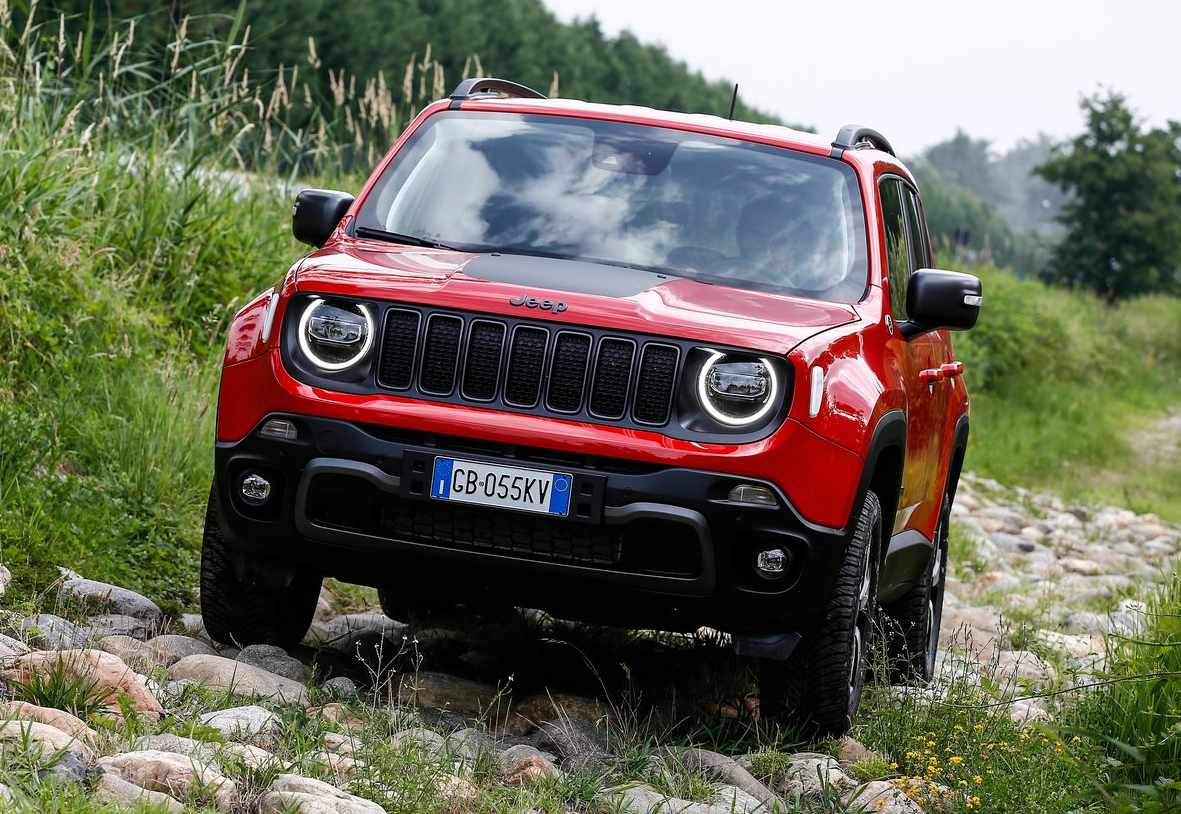
Set C. The Nissan Juke (top pic) is very European with design input and manufactured in the region. It also sells well here. The Suzuki S-Cross (just below) is also made in Europe and while not as numerous as the Juke, it still does well. The Honda H-RV (two pics down) is not that popular but neither is Honda in this region. 


The Mitsubishi ASX was quite a good selling model and its claim to leave the region may have hurt its success but that seems to be no longer happening. The UK was a major market that no longer sells the brand. Since 2023, the ASX in Europe has been a rebadged Renault Captur. Too early to see if that does much. 


Finally the Mazda CX-3, a car I would describe as one of the worst packaged cars for this class. It should have been a regular car. Some people liked them but they weren't that popular in Europe and are no longer made anyway. The CX-30 is supposed to be a replacement but is too large for this category. 


Set D. In this group, the Jeep Renegade (bottom pic) was the first to arrive and a locally made SUV too. It did quite well but not so much lately. The Suzuki Vitara is of a similar ilk and has sold in very similar numbers, winning the sales battle in 2023. 


The Kia Stonic (just above) was next to arrive and has settled into a consistent sales level. The Kamiq then Škoda came in 2019 and has done very well in a short time. The Hyundai Bayon made its debut in 2023 and is steadily rising but too early to say how it will ultimately go.

Summary: The consumer is spoiled for choice in this segment. In a few years, the number of models available has exploded. Their size and practicalness mean their popularity is of no surprise. 

Picture source: Netcarshow.

10 December 2024

Euro Compact SUV Comparison : 2013/15-2023 (Part 1)


As we have already seen the fall of the traditional car, now we can see their replacement below, the crossover/SUV. Some of the crossovers are nothing more than a slightly higher riding hatchback car but I guess you have to draw a line somewhere. 


Below are two graphs, done in small groups as there is a limit of how many can fit and still see what's happening. We will start with Set A, made up of Stellantis and one VW Group SEAT all with a South European flavour. Then below the charts, Set B with a broader cover including Ford and Toyota.


Set A. The Peugeot 2008 (top pic - 2020) and Renault Captur (second pic - 2018) both arrived in 2013 and have tracked each other closely. They have led this section of vehicles throughout with the former doing better over the last three years. The Fiat 500X arrived in 2015 but soon fell back disconcertingly. The SEAT Arona (pic just above - 2022) and Citroën C3 AirCross did something similar but have held up slightly better. It shows that even in a popular segment, success isn't a given.


Set B.
The Opel Mokka has been around since 2013 but shown here from 2025. It settled nicely in the 160-170k region for a few years but it wilted quite badly after that. The second generation arrived in 2021 and is likewise based on a PSA platform. The Opel Crossland is yet another taking a PSA platform and after a reasonable start, noticeably fell back. In 2024 its replacement has been named the Frontera, a name revived from way back. 


VW was a bit slow getting into this area of the market but like buses, two arrived in quick succession. The T-Roc (pic two above - 2022) was introduced in late 2017 and the T-Cross came eighteen months later. They aren't that much different in size with the former growing strongly but the latter fading. 

The Ford Puma (pic below -2020) came with a crossover model in 2020 that has proved popular for a company eschewing traditional passenger cars. Toyota then entered the segment with the Yaris Cross (pic above - 2021) and its rise has been impressive, only the T-Roc is above it.

Summary. They have come recently but have taken over the passenger car market. Their practical nature appeals and there is no sign of their popularity going anywhere but up. 

Picture source: Netcarshow. Part two can be seen by clicking here.

06 December 2024

Euro Small Car Comparison : 2000-23


How have small cars done over this century in Europe? So as not to clutter the graphs, I did it in two parts. The first has three French models with a Czech one thrown in randomly. The second more Germanic with a Toyota as a comparison.


First up, it is plain to see that the year 2000 had Peugeot (top pic 206 - 2003)and Renault as leading brands in this segment. Peugeot was on top, helped in part with its tendency to replace a model but keep the older one for a while, effectively having two entrants in the race. 


The volume race is over as we see the decline below. Citroën (2nd from top C3 - 2014) at times threatened to press the top two but never quite got there. I would say the surprise for me was the Škoda Fabia (above - 2019) which is a value for money proposition. It didn't reach the top and now is looking rather subdued. 


Not starting with as much volume as above, the still popular Corsa (above - 2007), Polo (below - 2022) and Fiesta (bottom - 2009) have run a fairly close battle with each other with the Toyota Yaris not too far off that trio. 


The Opel/Vauxhall Corsa started out on top but the Fiesta then took charge with the Polo always in the mix. The Fieats has now been axed as sales were very poor over the last few years. The Corsa still does OK but as usual, Toyota holds a steady line as the others declined.  


Small cross overs have hurt the above models. They are an ideal car for city driving but not enticing buyers anything like they used to.

Picture source: Netcarshow.

01 December 2024

Euro Compact Car Comparison : 2000-23


The compact sized passenger car has taken a beating during the 21st century. The SUV has been mainly responsible for the decline. In Europe, this was a very popular segment but not anymore and it's still progressively sliding downwards. 

Below is data collected from various sources and defining Europe is not the same from each one. It is close enough to give a clear picture of what has happened from the year 2000 through to 2023. The Golf includes the Bora and later the Jetta but just the Golf in latter years.


The VW Golf (top pic - 2013) had remained the best selling throughout, thanks of late to its enduring popularity in Germany although that is waning too. The Opel/Vauxhall Astra (above - 2007) and Ford Focus (just above - 2015) were sought after but are now on life support. The Focus ends in 2025 but the Asta continues. The fact it is now part of the Stellantis Group means it can share development costs with other models within the Group.  


I put in the Toyota Corolla (pic under chart - 2019) as a comparison. It's never been a hot seller and Toyota hasn't chased sales but the model has remained solid while the others have steadily declined. The hybrid technology Toyota has utlilised is working for the Corolla.

Picture source: Netcarshow.


01 September 2024

Europe Luxury Brands : 2024 (Jan-July)


Luxury brands listed here are associated with two countries, Italy and the UK. They are doing well, with Maserati, Bentley and Morgan the three that are down and substantially so. There are reasons for this. One is that new models will spike an increase. Another is that in this area of the market, pushing volume is dangerous because even wealthy owners want good residuals if they decide to part with their expensive motor car. Pulling back is at times the prudent course.  

Ferrari made a dramatic move with the Purosangue (picture above), a sporty cross over come grand tourer. It's selling well. 

Lotus is going through a metamorphic period, moving from a low sports car manufacturer to one having a much broader range of vehicles. Sales are zooming ahead as a result. 

The Aston Martin DB12 (below) has lifted that marques sales. Rolls Royce moving into the BEV segment has proved a success so far. 

Mclaren has been staying with its sportscar range, despite the success of its competitors as they branch out into SUV/crossover territory. Being idealistic is admirable but it doesn't necessarily pay the bills. If they do one, it has to fit the company's ethos and therein lies the challenge. 

Picture sources: Manufacturers.